
Thus far within these posts, we have discussed treatments that have been around for a while with tried-and-true records. Now, let’s discuss a new kid on the block that is both hip and retro in the best ways: platelet-rich plasma.
We know our bodies are incredible machines with vast healing capacity. Cuts, scrapes, bumps, and bruises are handled with relative ease, and even larger problems – like fractures and lacerations – resolve without much conscious input.
Platelet-rich plasma (PRP) takes advantage of our incredible healing capabilities to treat tendon and joint injuries. The fundamental tool is the platelet, a tiny particle essential to blood clot formation after injury. But platelets are more than just bricks in a clot wall; they are complex, dynamic components that play an active role in cell-to-cell signaling, initiating and guiding the cascade of pro- and anti-inflammatory signals occurring after tissue damage. Platelets help the body understand an injury has occurred and recruit the right players to fix the problem.
Could this process be manipulated to heal chronically aggravated tissues? Could we optimize the healing environment if we got more platelets to the site of injury? The answer is yes, though our understanding of it has come slowly. We are still studying PRP and working out the details, but some points are emerging:
- PRP is very effective at restoring damaged tendons.
- PRP injections can bring lasting improvement in joint pain.
- PRP provides longer-lasting relief than either steroid or hyaluronic acid.
What Happens During a PRP Procedure?
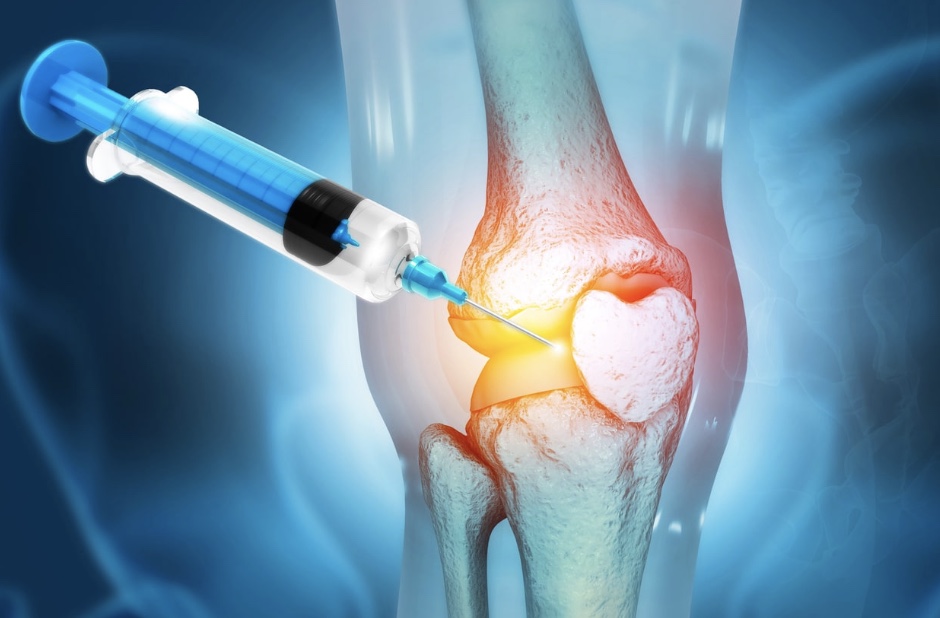
A person has blood drawn like he is donating, usually a half to a whole pint of blood. This blood is then placed into a centrifuge, which spins it until it separates into its various components. The platelet and white blood cell layer is withdrawn from the sample, resulting in about a teaspoon of plasma rich in platelets, sometimes as great as ten times the amount in regular blood. This plasma is injected into the target tendon or joint. In tendons, a process called “needling” or “fenestration” is often employed, which means the tendon is poked multiple times to help get PRP into the tissue. For joint pain, research has shown a series of 2-3 injections spaced 1-2 weeks apart is more effective than a single injection. (Some argue higher platelet numbers in a single injection are just as beneficial.)
After the injection, the affected area is supported for several days using a sling or crutches before beginning gentle range of motion exercises. Sometimes a narcotic is prescribed, but often acetaminophen and ice are sufficient for soreness. Two weeks after a tendon injection, an exercise program is started to load and stretch the tissue, stimulating normal remodeling and healing. Protection is much simpler for joints, in which patients are usually encouraged to take it easy for a couple days before resuming normal activity.
How Should I View PRP?
The buzzword for PRP is “investment” – of time, effort, and money. First, a caveat of using a biological product is that it works on biological time, which means SLOW. It can take up to three months for a person to experience relief from PRP, versus two weeks for steroid or three weeks for hyaluronic acid. Second, exercise therapy after the injection helps restore tendons most effectively, rather than simply resting and waiting for PRP to work. Third, because PRP is new and still viewed as experimental, it is not covered by most insurance companies, so local practices decide how much to charge. Costs can range from several hundred to several thousand dollars per injection, giving many people pause when considering PRP.
PRP may suffer a little from what can happen with new and promising therapies. Early adopters start using it before the evidence has quite caught up, leading to uncertainty in standardized processing, administration, and monitoring of treatment outcomes. However, after about fifteen years of being solidly in the sunlight of musculoskeletal research and practice, most physicians and scientists agree that PRP is:
- Safe – Complications and adverse events are very similar to other injection therapies.
- Effective – Head-to-head studies show it is at least equivalent to hyaluronic acid, and a growing number of studies show benefits comparable to steroid.
- Long-lasting – PRP exceeds both steroid and hyaluronic acid in duration of pain relief.
If I could only say it was inexpensive and rapid-acting, PRP would be a slam dunk for joint and tendon pain. However, the long onset of action and lack of insurance coverage are barriers for many patients. As evidence grows, there is hope that cost will soon be less of an issue, making PRP more accessible for all. In the meantime, it remains a viable option for treating troublesome musculoskeletal pain.
References:
- Corsini A, Perticarini L, Palermi S, Bettinsoli P, Marchini A. Re-Evaluating Platelet-Rich Plasma Dosing Strategies in Sports Medicine: The Role of the “10 Billion Platelet Dose” in Optimizing Therapeutic Outcomes—A Narrative Review. Journal of Clinical Medicine. 2025; 14(8):2714.
- Glinkowski WM, Gut G, Śladowski D. Platelet-Rich Plasma for Knee Osteoarthritis: A Comprehensive Narrative Review of the Mechanisms, Preparation Protocols, and Clinical Evidence. J Clin Med. 2025 Jun 5;14(11):3983.
- Rodríguez-Merchán EC. Intra-Articular Platelet-Rich Plasma Injections in Knee Osteoarthritis: A Review of Their Current Molecular Mechanisms of Action and Their Degree of Efficacy. Int J Mol Sci. 2022 Jan 24;23(3):1301.




 Musculoskeletal Pain Blog
Leave a comment